Saturday, October 15, 2011

Blog Drought

If you're reading this, you've probably noticed that I haven't been posting much this semester.

The good news is that I remain happy, healthy, and mostly sane. I'm also enjoying my courses immensely, despite the fact that the workload is probably the heaviest I've had at Yale. Finis origine pendet, indeed. 

I think my lack of posts can be attributed to two general conclusions:
  1. The most important things in life are not necessarily the most interesting to write about.
  2. Not everything that can be blogged about should be made public.
That said, I plan to start blogging regularly again at some point, possibly starting next semester. There's definitely plenty to write about—interesting coursework, plans for next year, and the usual shenanigans. For now, though, life is keeping me busy and I'm just hanging on for the ride.

QOTD: "Man will become better when you show him what he is like."
- Anton Chekov

Wednesday, August 31, 2011

Fall 2011 Courses

Here are the courses I've decided on for this semester:

CGSC 490 Cognitive Science Senior Colloquium and Project
Joshua Knobe
A research colloquium leading to the selection of a topic for, and the completion of, the senior essay. Students attend regular colloquium presentations by outside scholars.

ECON 527 Behavioral and Institutional Economics
Robert Shiller
Behavioral economics incorporates insights from other social sciences, such as psychology and sociology, into economic models, and attempts to explain anomalies that defy standard economic analysis. Institutional economics is the study of the evolution of economic organizations, laws, contracts, and customs as part of a historical and continuing process of economic development. Behavioral economics and institutional economics are naturally treated together, since so much of the logic and design of economic institutions has to do with complexities of human behavior. The course emphasizes two main topics—behavioral macroeconomics and behavioral finance—though references are made to other branches of economics as well.

PSYC 152 Moralities of Everyday Life
Paul Bloom
The modern science of moral thought and moral action explored through disciplines such as cognitive science, social and developmental psychology, neuroscience, behavioral economics, and analytic philosophy. Empathy and compassion in babies and young children; emotional reactions to family, friends, and strangers; the origins of prejudice and bigotry; sexuality, disgust, and purity; punishment, revenge, and forgiveness; the relationship between morality and religion.

INTS 428 Social Entrepreneurship in Developing Economies
Robert Hopkins
Completion of the senior essay on a topic related to the use of social entrepreneurship in regional economic development.

HIST 202 European Civilization 1648-1945
John Merriman
An overview of the economic, social, political, and intellectual history of modern Europe. Topics include the rise of absolute states, the scientific revolution, the Enlightenment, the French Revolution and Napoleon, the industrial revolution, the revolutions of 1848, nationalism and national unifications, Victorian Britain, the colonization of Africa and Asia, fin-de-siècle culture and society, the Great War, the Russian Revolution, the Europe of political extremes, and World War II.

G&G 205 Natural Resources and Their Sustainability
Jay Ague
The formation and distribution of renewable and nonrenewable energy, mineral, and water resources. Topics include the consequences of extraction and use; depletion and the availability of substitutes; and economic and geopolitical issues.

Monday, August 29, 2011

Take Four

Worlds away from the land of xima and capulanas, here I am back in New Haven, ready for a fourth year of R&R (rehabilitation and responsibility).

Views from our balcony:


"Live neither in the past nor in the future, but let each day absorb all your interest, energy and enthusiasm. The best preparation for tomorrow is to live today superbly well."
- William Osler

Thursday, August 25, 2011

Adeus Moçambique

Upon a friend's recommendation, I stopped by the Parque dos Artesanatos this morning with a bag of old clothes I had been planning to donate and instead traded them for a few handicrafts before heading to the airport for my flight back home. Ended up picking up a small drum, sandalwood vases, a miniature guitar, painted masks, and two stone elephant figurines.

I don't think any attempt to summarize my time here would really do it justice. I can safely say that this has been the most physically as well as emotionally intense trip of my life. Breathtaking landscapes, unbelievable life stories, grinding poverty, and an ambitious start-up project, all on a steady diet of xima and malaria medication. Looking ahead: new perspectives, new friends, and loads of beautiful footage for our senior thesis. Até à próxima, Moçambique!

生日사파리

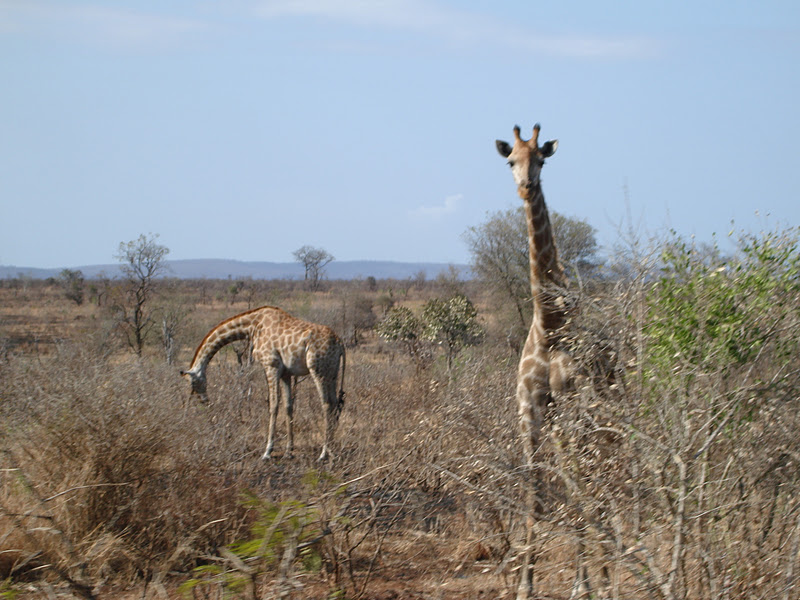
Crossed the border into South Africa for a one-day safari trip to Kruger National Park. The pictures speak for themselves.


Wednesday, August 24, 2011

Interviews

Spent the last few days collecting hours and hours of interview footage for our senior thesis next semester. Notable interviewees include Jake, Ana, Sinezia, and John. In addition to clarifying a few points about our experience at the pilot mill site, we discussed the future direction of the Millennium Mills.

Ana also assigned us more reading on systemic design so that we can better understand the complexities of the food system in rural Mozambique.

More on both topics to come in the fall, when we actually put together a presentation about the project.

For now, back to Maputo!

Monday, August 22, 2011

That Time

Remember that time our crazy driver ran over a seagull, a snake, a rooster, and a goat on the drive back to Nampula?

Se lembra dessa vez quando tinha que esconder-me no armário?

Sunday, August 21, 2011

Mergulho

Here's the view we woke up to today:


Spent the morning scuba diving (my first time!) with resident Divemaster Angela. Mozambique's long coastline evidently has some of the best dive sites in the world.
 
The newbs

After lunch, we spent most of the day reading and napping on the beach. I'm currently halfway through On the Road on Angela's Kindle. There's something beautifully incongruous about following Kerouac's misadventures across America while gazing out at the Indian Ocean.

Pemba Beach
Impromptu concert

"I like too many things and get all confused and hung-up running from one falling star to another till I drop. This is the night, what it does to you. I had nothing to offer anybody except my own confusion."
- Jack Kerouac, On the Road


Finally understand JA's performance...

Saturday, August 20, 2011

New Game

Novo jogo em Moçambique: Beber o uísque rapidamente antes que o gelo derreta para que não tenhas dor de barriga.

On a happier note, we're making an unexpected detour to Pemba, the capital of Cabo Delgado Province, for the weekend.

Friday, August 19, 2011

MMM Food Fair

Today was the big feira, where we introduced new foods and food preparation techniques to Fátima's customers. Ana had spent the entire night baking various cookies, biscuits, and breads incorporating local ingredients. The MMM team also featured various dried fruits and vegetables as well as nutrient-rich powders that could be mixed into the stable xima.

Country director Jake Walter chatting with Belchion
Ana and Diandra setting up the booth
Curious customers at Fátima's mill
The booth
Close-up of the goods
Waiting for the presentation

In a combination of Portuguese and the local Makua, the MMM team introduced each of the food items and then passed around samples for everyone to enjoy. This was then followed by a xima cooking demonstration using some of the new vegetable powders.

After the fair was over, we spent the afternoon in a brainstorming session with TechnoServe country director Jake Walter and his team. Our discussion covered the various options for setting up a dried food distribution network in Nampula Province as well as the importance of including an educational component at each new franchise mill site to teach the local community about the importance of vitamins and balanced nutrition.


We then packed our bags, said goodbye to Cipriano, and headed back to Nampula. Adeus, Ribáuè!

Capulanas

In my earlier I'm-on-a-flight-to-Maputo-but-don't-know-really-know-much-beyond-a-few-demographic-figures post, I included the following gems, extracted from the Mozambique CultureGrams file:
When northern men and women meet each other, they clap hands three times before saying "Moni" (Hello).
Married women usually wear a capulana (wraparound skirt) tied about the waist and a head scarf. In the northern region, a man who cannot provide his wife with at least one capulana each year is not considered deserving of her respect.
I haven't found the former to be true, at least not in Nampula Province. The standard greeting in Ribáuè, Nampula and Ilha is "Salaama" (no clapping involved).

But to say that northern Mozambican women wear capulanas is like saying that Andover is preppy or that Greece has some budget issues; capulanas are everywhere. They are worn as skirts and head scarves, as the CultureGrams report notes, but they also have many other uses, which include pretty much everything for which you could conceive using a large sheet of colorful, wax-printed cloth. Some of the things I have seen being carried in a capulana: fresh maize, dried maize, milled maize, firewood, cashew nuts, chickens, rabbits, sugarcane, and babies.


Diandra, Angela and I decided to purchase capulanas to wear for the MMM community fair today (next post), and so we followed Belchion to the local market to pick out some designs. We found that even a village of Ribáuè's size has two long rows of stalls selling capulanas in every color and design imaginable, ranging from Dia da Independência-themed sheets to floral prints.

Capulana section of the market

I picked up two to make into shirts and one to display as a wall covering either at home or at school. At a cost of about $7 each (120 meticais for the cloth and 60 mets for the tailoring), the shirts were by far the best bargain I've ever had on custom-made clothing. Here we are below, dressed in our finest capulanas and ready for the big fair at Fátima's mill:

Thursday, August 18, 2011

Saúde e Saudade

This morning, we paid a visit to the local district office of the Department of Health in order to learn more about the issue of malnutrition in Ribáuè.

Serviços Distritais de Saúde

We spoke with the local director and a "malnutrition technician," who confirmed that the community suffers from widespread malnutrition due to shortages during the dry season as well as nutritional deficiencies in the corn-based diet. We quickly discovered, though, that reliable statistics would be hard to come by; record keeping tends to be spotty, and figures such as poverty and malnutrition rates, based mostly on anecdotal evidence, vary widely. The only measure the Department of Health could use to estimate malnutrition rates is the number of patients who come to the clinic to be treated for malnutrition, but these represent only a fraction of the most severe cases, excluding many more who are too far from the nearest clinic or are unable to receive treatment for other reasons.

They told us about a new initiative they are testing with the most severe cases that has been somewhat successful. A non-profit organization helped the Department of Health develop a peanut-based food supplement that can be used to deliver much-needed nutrients to malnutrition patients. We also discussed TechnoServe's goal of fortifying maize meal with vitamins, which they agreed was an untested but highly promising concept.

Next, we headed to Fátima's mill to interview her about her involvement with the Millennium Maize Mills project.

Dona Fátima

She talked openly about the factors that made her an entrepreneur, which include a willingness to think outside the box, as well as necessity—as a single mother, she was driven to find ways to support her children and herself. After working for several years at a nearby cotton factory, she decided to take out a loan and launch her maize milling business. Despite her struggles, she is now doing well; indeed, it was Fátima's success that caught TechnoServe's attention. (As a side note, the MMM's project future mill owners will be women who would not be able to launch a business on their own, in line with TechnoServe's mission of fostering entrepreneurship where it is needed most, but they wanted to partner with an experienced businesswoman for the initial pilot studies.) As we spoke with Fátima, it was clear that she has a knack for business and will be a valuable asset for the MMM project as its leaders seek to expand its impact throughout the region.

Meanwhile, her assistant was packaging maize meal to sell at nearby markets:


After lunch, we interviewed Belchion, a TechnoServe employee assigned to the Millennium Maize Mills project who has been an extraordinary resource during our time in Ribáuè, teaching us about everything from basic words in Makua and local customs to technical aspects of the milling process.


In addition to answering our questions about MMM, Belchion was able to provide insightful comparisons with other TechnoServe initiatives he has worked on. He also added that, as a native Makua, he considers this project particularly important and meaningful.

As meninas, antes da cena que tive que enterrar...

By the way, in case you're wondering why I haven't posted any of the interview footage we have, it's because 1) the files are large, 2) they need to be edited, and 3) they wouldn't make sense for most of you anyway, since they're in Portuguese. I'll try to post a few edited videos along with updates on the project in the fall.

On Stars and Bendzko

Listening to:
"Wenn Worte meine Sprache wären" by Tim Bendzko


It seems a bit strange to be rocking out to the voice of a macunha singing about first world problems on a CD I purchased in Munich ages ago earlier this month. But the lyrics to "Wenn Worte meine Sprache wären" (If words were my language) are actually kind of relevant, albeit not exactly in their original sense.
Chorus:
Mir fehlen die Worte, ich
I lack the words, I
hab die Worte nicht
do not have the words
dir zu sagen was ich fühl'
to tell you what I feel
ich bin ohne Worte, ich
I am without words, I
finde die Worte nicht
do not find the words
ich hab keine Worte für dich
I have no words for you
If it were my song, of course, the next line would be "Because I have no idea what you're saying in Makua."

In other news, here are a few more comments about Ribáuè and our experiences here:

First, I'm surprised by how relaxing our time in Ribáuè has been. 'No shit, Sherlock,' you may be saying, 'what were you expecting to find in a rural Mozambican village?' But really, the slow pace of life, beautiful scenery, and friendliness of the locals are making this week the most rejuvenating segment of my summer. During a post-dinner constitutional yesterday evening against the backdrop of the glowing sunset, I found myself thinking, for the first time this trip, 'This is why people fall in love with Africa.'

Second, on a related note, there is nothing to do after sundown (about 5:30 this time of year) but wait for the stars to emerge. But when they do, it is truly a spectacular sight. I've never before such a multitude of stars so clearly; the night sky appears to hover just above the horizon, weighted down by a million glittering points of light. Particularly memorable was my first sighting of the Southern Cross (the constellation featured as Cruzeiro do Sol on the flag of Brazil).

On a less romantic note, our entire team is suffering from mild stomach issues. Heaven knows from what. A less than perfectly washed piece of fruit? Bacteria in yesterday's sandy xima? The piri piri sauce? Maybe the chicken at lunch was slightly raw? This may call for a temporary retreat to the almond honey flax granola bars I brought from home...

Wednesday, August 17, 2011

Crianças

When they're not chanting "Whitey!" at you, the kids here are actually adorable.

Especially if you pull out a camera (which I constantly do). They often approach you excitedly with a shy smile and, if you respond with a nod and point the camera at them, they'll quickly strike a pose. Extra points if you show them the picture afterward, which sometimes incites uncontrollable laughter before they run off to fetch more friends.

Here are a few of my favorites from the past week. No captions needed.


Mais Entrevistas

Having seen and studied several mills in action, we decided to focus today on interviewing members of the community about their diets and milling habits and in order to learn more about the local culture.

We started with Senhor Cipriano's family, who live on the other side of the village at the foot of Ribáuè Mountain. He and his wife invited us into their home, which, though small, was tidy and well maintained, and patiently answered the interview questions we had prepared.

We learned that Cipriano's wife purchases 60 kilograms of maize a month, all of which is prepared and consumed as xima by her family. This is occasionally supplemented by vegetables or dried fish, purchased at the market or, more rarely, chicken meat, provided by the few chickens they raise in their backyard.

We also explained that Fátima is considering purchasing a fortification machine to add nutrients to maize flour during the milling process and were pleased to discover that Cipriano's wife understood the importance of vitamins and thought this was a good idea. This was especially encouraging because we had heard from several TechnoServe employees earlier that there is very little awareness of vitamins in many of these villages. In fact, a similar vitamin fortification project backfired in Tanzania because of misconceptions, particularly that vitamins were something for AIDS patients to prevent weight loss and delay death.

Overall, our interview with Cipriano and his wife was quite heartening, as they both seemed receptive to ideas on improving nutrition and milling practices in Ribáuè. Our enthusiasm was dimmed, though, upon seeing Cipriano's underweight, malaria-stricken baby daughter, a sobering reminder that addressing the multitude of health issues endemic in the village and throughout the region is going to require a great deal of focused effort.

Path leading up to Cipriano's neighborhood
Roadside kiosk selling laundry detergent, tomatoes, and snacks
Cabritos near Cipriano's house

Our next interview was with a professor at the local school and his wife. The fact that we conversed in an outdoor gazebo with electric lights and were served Coca-Cola—both status symbols in rural Mozambique—indicated that their family was relatively better off than the owners of other homes we had seen. Incidentally, the Coke was the first soft drink for this non-soda drinker in over two years. Unceremonious, I know, but 1) I didn't want to reject their hospitality, especially given the region's mistrust of foreigners, and 2) at least it was more flavorful than xima.

In order to gauge the milling habits of the professor's family, we first asked how many kilos of maize flour they go through in a month and how often they visit the mill. We found out that the professor's wife does not take her family's maize to the mill herself but rather delegates this responsibility to her children.

We next asked how many children they have. At first the mother replied "two sons," but we could see that there were several more children playing in the courtyard. The professor then explained that they are actually raising seven children, among them nieces, nephews, and the child of a family friend—stark reminders of the toll of the AIDS epidemic in Mozambique.

The professor's home and children
E as montanhas!